The good, bad and ugly from Newcastle’s first five games of 2026/27

The international break has come at a good time for Newcastle United, as we can take a breath and try to get players back fit for the resumption of the Premier League.
There has been a lot of talk about the underlying numbers with the team this season. Although it is too early to draw huge conclusions from the data, it feels like a good point to take stock and see what they could mean.
Below we will look at a selection of stats, from the good to the bad to the ugly and try to provide some context to them.
The good
Clearances per match – 34.8 – League rank 1st
This could be spoken about as a negative sign, as you wouldn’t want your team to be making lots of clearances every match, but in the context of the five game period, it can be seen positively.
In previous seasons, we have been criticised for not defending our box well enough. Under Matthias Jaissle, there seems to be a renewed vigour for the ugly side of defending. Over time, we will want to develop a more positive playing style that allows us to limit the amount of defending we need to do.
However, this enthusiasm for defending has helped us in games against Liverpool and Hull especially. The last 20 minutes against Hull were difficult to watch, as we invited a lot of pressure, but the defenders managed to protect the three points. The number of clearances were key to that.
Despite the positives we can take from this, hopefully we have less of a need to make huge numbers of clearances as the season progresses.
Lukas Hornicek – 3.2 goals prevented – League rank 1st
Although the team stats make for underwhelming reading after five games, there are some crumbs of comfort in the player stats. Lukas Hornicek has had an excellent start to the season, as he has played a key role in our goal.
Currently, he leads the league for goals prevented with 3.2. Goals prevented measures the expected goal on target (xGOT) of each shot that has found the target and ranks the impact of the goalkeeper.
Last season, Nick Pope ranked 18th out of the 20 starting goalkeepers in the Premier League for this metric. Shot stopping was once a strength of his, but it fell off in the latter part of his career as our number one.
Hornicek leading this metric at an early stage is encouraging, as he is still adapting to English football. He has made a number of impressive saves so far this season and the team now feels like it has stronger foundations.
The bad
Possession won in the final third per match – 1.6 – League rank 20th
Considering the briefs that were given regarding the style of play that Matthias Jaissle wants to coach, it is very surprising that we are the worst in this metric. The Red Bull style of play is known for being intense and rely on creating chances through pressing high on the pitch.
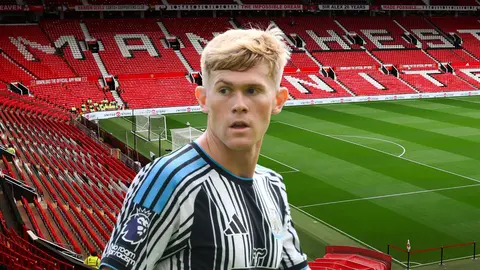
Currently, we are the worst at winning the ball back in the final third and this will be an area for improvement that Jaissle wants to work on. The arrival of Matias Fernandez-Pardo will help, as he looks more suitable to a high press. Meanwhile, the absence of Will Osula has negatively impacted the press.
The small sample size needs to be noted here, as we have been in positive game states in three of our matches. This reduces the need for risks, while the huge injury list may have led Jaissle to lowering the intensity of his demands.
That being said, if we remain at the bottom of this metric in the coming weeks, questions will need to be asked about what Jaissle is trying to do with the squad.
Big chances created – 9 – League rank 17th
Shot generation and big chance creation has been an issue for longer than 12 months. In the first few years of Eddie Howe’s tenure, we were often beating teams convincingly and scoring a high number of goals. After the sale of Alexander Isak, his attacking patterns were less effective and the issue remains to this day.
Interestingly, we have created the same number as Liverpool and more than Aston Villa. Both clubs are also in a period of transition and this shows that attacking patterns take time to bear fruit. Hopefully, we will see the team create more chances in the coming weeks as the team adapt to the new manager.
From these nine big chances, we have missed seven of these. This low conversion rate is another concern, but it isn’t surprising given the forward options available to the manager. It will be hoped that the return of Will Osula and the adaptation of Fernandez-Pardo will help improve our end product.
The ugly
Expected league position – 19th (understat)
This is the stat going around on social media that is being used to question the sustainability of our form. Firstly, the ‘truth table’ as the expected league table has been coined is very useful and usually a good predictor of what is to come. If a team is overperforming or underperforming their expected metrics, usually there is a reversion to the mean and results correct themselves.
However, a five game period isn’t that useful in making sweeping judgements about where a team sits. Teams have had fixtures of differing difficulty and the smaller the sample size, the less reliable the data is.
If we look into our five games, you could argue that we deserved to win three of them (Liverpool, Spurs and Hull) and were outplayed in the other two (Bournemouth and Leeds) – even if the stats aren’t reflective of that.
The Liverpool match was full of low percentage chances for them, as they tried to chase the game and the game state dictated to the type of game that broke out. The late penalty also had a huge impact on the xG. Without it, it was relatively equal.
The Spurs game was a professional away performance, where we took our chances and they didn’t. Anyone who watched the game will agree that the result was the correct one.
The first 45 minutes against Hull were really good and if the penalty is scored, it probably goes on to be a comfortable win, both in terms of the scoreline and the underlying metrics. Tiredness and lack of bench options led to the data being skewed as Hull chased the game.
The first halves against Bournemouth and Leeds were bad, but the fightback against the former in the second half also means that a point wasn’t completely undeserved.
As a collective the data is a concern, but when you dig into the context of each game, I don’t believe we deserve to be in the bottom three of the table.
However, the club will be fully aware that conceding the number of shots that we have been isn’t a sustainable game model. You would expect performances to improve.